

Microplastics Are Inside Your Arteries. Here's What That Means for Your Heart.
Plastic exposure isn't just an environmental problem. It's a medical emergency that's unfolding inside your own body — right now, in your arteries, your lungs, your liver, your blood, and even the placentas of unborn children.
We've known for a while that microplastics and nanoplastics are accumulating in human tissues. What we didn't fully understand until recently is what that actually does to your health. We're no longer just documenting where plastic ends up. We're now measuring the consequences.
The results are alarming.
The Study You Need to Know About
A landmark study published in the New England Journal of Medicine examined 304 patients who were scheduled for a procedure called a carotid endarterectomy — surgery to remove plaque from the carotid arteries in the neck. These arteries supply blood to the brain, and when plaque builds up at the carotid bifurcation (where the artery splits in two), the risk of stroke goes up dramatically.
The researchers took the plaque that was surgically removed, examined it under electron microscopy, and asked a simple question: are there microplastics in here, and does it matter?
It mattered enormously.
Roughly half of patients had detectable polyethylene — the same plastic used in grocery bags and water bottles — in their arterial plaque. About 10% had PVC, the plastic used in pipes and food containers. The patients whose plaque contained micro- and nanoplastics had a 4.5 times higher risk of heart attack, stroke, or death over the following two and a half years compared to patients with no detectable plastic in their plaque.
A hazard ratio of 4.5 is not a subtle finding. To put it in perspective: being in the bottom 20% of physical fitness is associated with a hazard ratio of around 4.1 for all-cause mortality. A high coronary calcium score — one of the most important cardiovascular risk tests we have — carries a hazard ratio of about 1.94. Poor sleep from night shift work increases mortality risk by about 26%.
Microplastics in your arteries: 4.5. A 353% increased risk of heart attack, stroke, or death.
This is not a minor footnote in the medical literature. This is one of the most striking cardiovascular risk signals I've seen in years.
Why This Is Happening
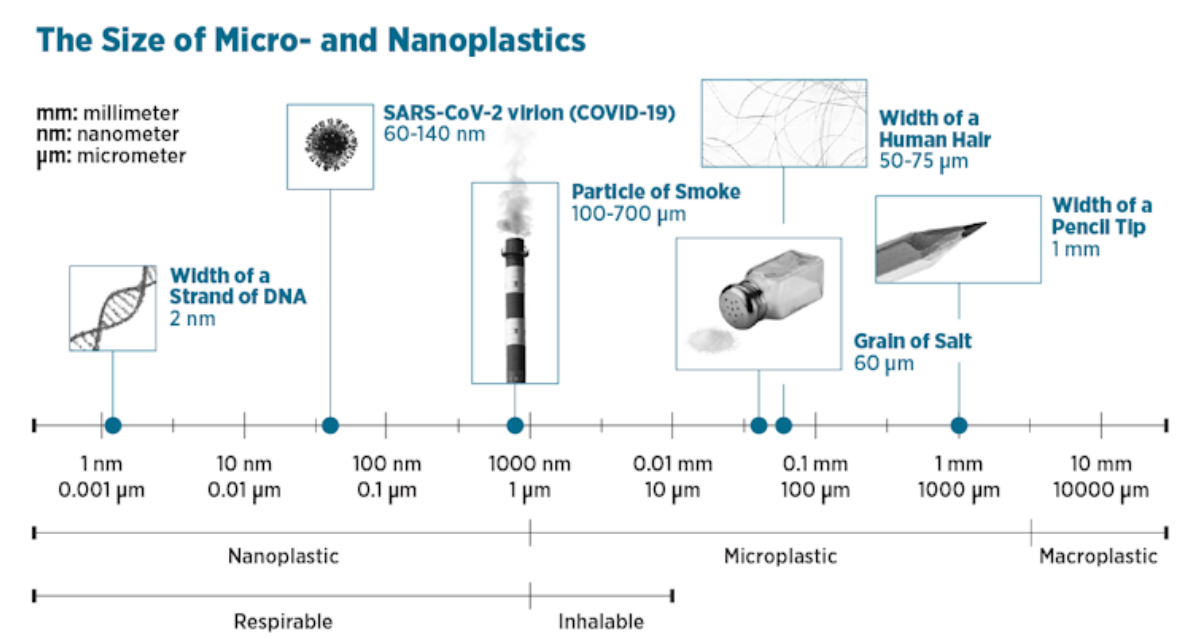
To understand why plastic ends up in arterial plaque, you need to appreciate just how small these particles get. Plastics start out visible to the naked eye, but as they degrade they shrink into microplastics and nanoplastics — particles about the size of a strand of DNA, which is only 1 nanometer wide. At that scale, nanoplastics easily accumulate in cells as they are small enough to cross any biological barrier. They enter through the air we breathe, the food we eat, and even through skin contact with cosmetics and personal care products.
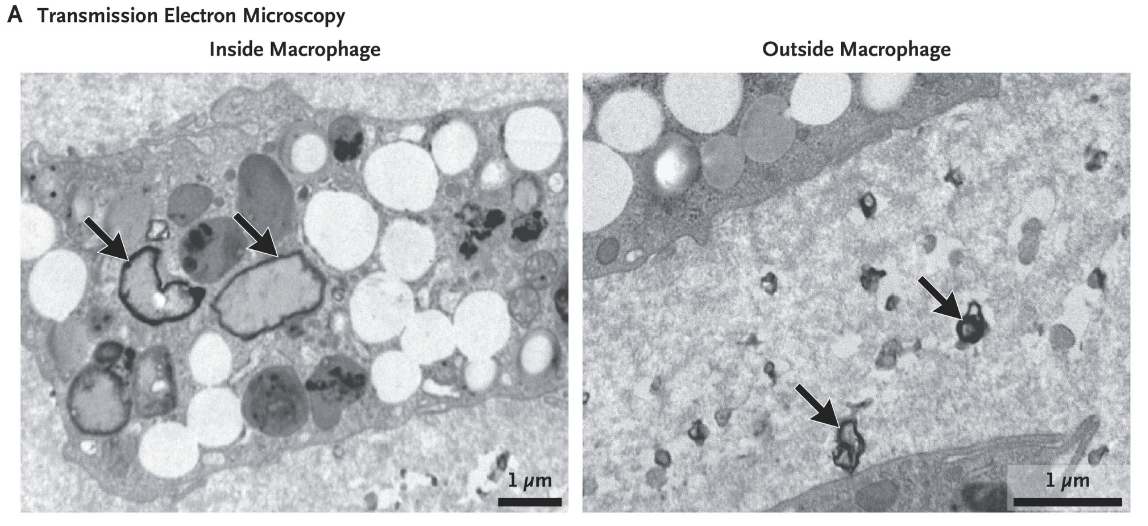
Once inside, they accumulate — and we now have electron microscope images showing jagged fragments of plastic embedded inside immune cells deep within the body.
This is not a theory. We can see it. We can measure it. And we are now learning the consequences.
Plastics cause damage at the cellular level through oxidative stress, genotoxicity, reproductive toxicity, and a sustained inflammatory response. These are not isolated nuisances — they are root causes of chronic disease. And plastic production is on an exponential curve, with global output on track to roughly double in the next 15 years.
What You Can Do
The good news is that this isn't hopeless. There are real, practical steps you can take starting today.
Reduce your exposure.
Plastic water bottles are the single biggest source of microplastic exposure according to most epidemiologists. This one change alone is worth making immediately. Beyond that: stop heating food in plastic containers (the more flexible the plastic, the more it leaches). Ditch synthetic athletic wear when you can, swap plastic shopping bags, and think twice about single-use plastic cutlery, straws, and coffee cups.
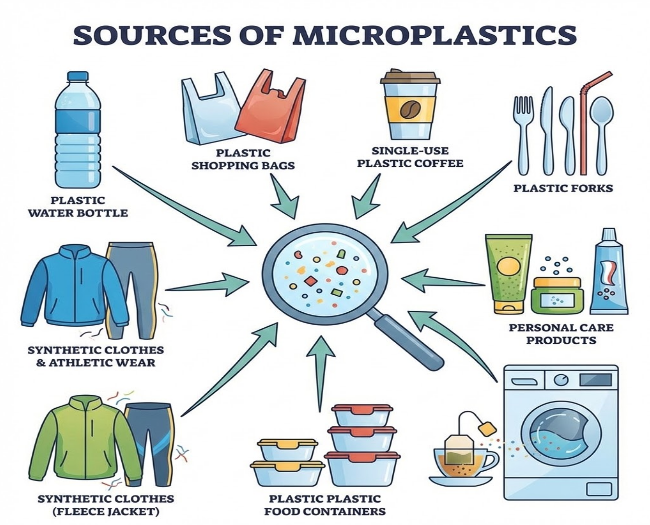
And about tea — I drink green tea constantly, which is why this one stings. Most commercial tea bags are sealed with plastic-based glues, and steeping a single bag releases an estimated 11.6 billion microplastic particles and 3.1 billion nanoplastic particles into your cup. Switch to loose leaf tea brewed in a glass vessel. It's a simple swap and one of the highest-yield changes a tea drinker can make.
Take probiotics.
Anyone who has followed my work knows I am deeply convinced that a high-quality probiotic is one of the most important things most people can take — and microplastic exposure is yet another reason why. Probiotics appear to protect against plastic toxicity through several mechanisms: they strengthen the intestinal lining so fewer particles enter the bloodstream, they modulate the immune response to reduce inflammation, and in some cases the bacteria themselves directly bind to plastic particles and other toxins before they can cause damage. The strains that come up most consistently in the research are Lactobacillus rhamnosus, L. reuteri, and L. plantarum.

Vote with your wallet.
Stop buying bottled water. Support companies moving away from single-use plastic.
Share this information — because most people have no idea that the plastic they interact with every day is ending up inside their arteries, and they deserve to know that there are things they can do about it.
This is what functional medicine is for: finding the real threats to your health before they become irreversible, and giving you the tools to do something about them.
References:
Marfella R, et. al. Microplastics and Nanoplastics in Atheromas and Cardiovascular Events. N Engl J Med. 2024 Mar 7;390(10):900-910. doi: 10.1056/NEJMoa2309822. PMID: 38446676; PMCID: PMC11009876.
Teng X, Zhang T, Rao C. Novel probiotics adsorbing and excreting microplastics in vivo show potential gut health benefits. Front Microbiol. 2025 Jan 10;15:1522794. doi: 10.3389/fmicb.2024.1522794. PMID: 39867494; PMCID: PMC11757873.
Would you like more information, or to schedule an appointment?