

What Is Functional Medicine?
Functional medicine isn't an expensive lab panel or a bag of supplements — it's one question: why is this patient sick, and how do I fix it? In this interview with Dr. Noor Gajraj, we cover a variety of topics around the field of functional medicine.
We get into the 24-hour fast I prescribe, why probiotics carry more evidence than almost anything in my cabinet, my argument against chasing a vitamin D level, and the four criteria I use to diagnose mold illness — including the exact labs, which are a single blood draw and often covered by insurance.
Jump to a section:
- 01:02 — What is functional medicine?
- 02:20 — Why doctors fail to help their patients
- 04:32 — The reason SIBO treatments fail
- 08:30 — Why prebiotics aren't the answer
- 09:03 — An easy gut reset
- 11:53 — The issue with vitamin D
- 15:52 — How probiotics bind toxins and more
- 25:29 — Mold is not just an allergen
- 27:54 — How to diagnose mold
- 32:53 — Why patients stay sick: the limbic system
What Is Functional Medicine? One Question, Not a Lab Test.
It isn't a single test, a single treatment, or the fact that you talk about lifestyle. It's one question — why is my patient sick? — followed by a second: how do we fix that?
Because the question is the discipline, the credential matters less than the thinking. An MD can practice this way. So can a dietician or a chiropractor.
Why Doctors Fail to Help Their Patients: One Hands You a Pill, the Other a Bill
Conventional doctors are paid by volume, not by getting anyone well. The fastest way to move a patient through a schedule is to write a prescription. Most have no training in lifestyle medicine and no particular interest in it.
The integrative world does the same thing with a different bottle. Patients buy a couple thousand dollars of lab work, then every abnormal number gets micromanaged with a supplement.
The Reason SIBO Treatments Fail: Nobody Set a Foundation First
IBS is rampant, and depending on the study, 40 to 50% of those patients have SIBO. GI doctors used to tell me it didn't exist. Now there are ICD-10 codes for it.
The pattern I see constantly: the patient gets Rifaximin, feels better for about a week, then everything comes back. No fast, no dietary change, no probiotics — so the reason they developed SIBO in the first place was never touched.
A large share of those patients never needed the antibiotic at all. Some genuinely do, and stubborn cases with high gas levels may need herbs or antibiotics layered on top. The sequence is what tells you which patient you're looking at.
Why Prebiotics Aren't the Answer for a Reactive Gut
Probiotics are the ones carrying the evidence. The meta-analyses don't stop at bloating, pain, constipation, and diarrhea — probiotics treat osteopenia, lower blood pressure, lower A1c, improve cognition in Alzheimer's patients, and make the flu vaccine work better. If a pharmaceutical company owned them, you'd have heard about it every day for twenty years.
Prebiotics are a different story in my practice. Patients with reactive guts and advanced IBS ferment those fibers and get more bloating and heartburn, so I stay away from them.
I haven't found butyrate especially helpful either. For me it's really probiotics — given broadly, at a real dose.
An Easy Gut Reset: 24 Hours, Dinner to Dinner
Most of the game is convincing someone they can do it. Here's the whole protocol:
Eat dinner, go to bed — you're already fasting
Skip breakfast, drink coffee
Skip lunch, drink tea, sparkling water, or bone broth
Eat dinner
If you get hungry at 2:00, you can be hungry for four hours.
My GI patients hit hour 18 to 20 and notice their belly has stopped hurting. That's the moment the problem stops feeling mysterious. Most repeat it weekly as a reset, and they have a tool ready the next time things flare.
Fasting is also one of the few interventions with genuine longevity evidence behind it, so we're doing two things at once.
The Issue With Vitamin D: Get to 40 and Stop Chasing It
I'm not a big vitamin D person, which puts me at odds with most of my field. If a patient is deficient, I want them not deficient — I get them to 40 and call it a day.
There's a popular argument that you should push to 80 or 100. I have never once seen a patient optimize their vitamin D and take a step forward, and the literature is unimpressive in both directions.
I'd rather spend that conversation on what you're eating, whether you have sleep apnea, whether we're missing iron deficiency, what your gut looks like, and what toxins you're exposed to. Those move the needle. When I do prescribe vitamin D, I like it paired with K2.
How Probiotics Bind Toxins — and Why I Left Zeolite Out
Binders reduce toxic burden in mold patients. The ones with evidence are charcoal, clay, chlorella — and, it turns out, certain species of probiotics.
I was taught to prescribe those as separate bottles, which is a nightmare for a patient already juggling fifteen. So I formulated an all-in-one with Moss Nutrition called ProBind Select.
The design decision that matters most is what's missing. Zeolite, silica, and pectins show up in most combination binders, and they either provoke reactions in sensitive patients or have no medical evidence supporting their use.
Mold Is Not Just an Allergen: Seizures Are Not an Allergy Symptom
Medical school teaches that mold is an allergen — spores and fragments causing respiratory problems and sinus infections. That's true. It's also incomplete.
One of my first mold patients spent twenty years crawling through moldy air conditioning ducts pulling out ductwork. He came to me with daily seizures, tremors, and depression.
Tremors and seizures are not allergy symptoms. What I kept finding in these patients was toxicity — an immunological response to mycotoxins, the toxins mold produces defensively. Some patients have allergy, some have toxicity, and plenty have both.
How to Diagnose Mold: Four Criteria and One Blood Draw
These are my criteria, not anyone's official ones:
Chronic fatigue, plus persistent neurologic, psychiatric, or neurocognitive problems. No chronic fatigue, I'm not buying it.
The illness isn't explained by something else.
Symptoms began or worsened after exposure to a water-damaged building. No chronology, I'm not buying it.
Biochemical evidence of mold.
For that last one I use Quest — IgG antibodies to aspergillus, penicillium, and stachybotrys, which are three separate test codes — plus a mold IgE panel, or urinary mycotoxins.
After roughly 75 patients, a pattern has emerged. High IgG shows up in the neurologic, chronic fatigue, and autoimmune presentations. High IgE shows up in the mast cell and histamine patients. One blood draw, often covered by insurance.
Here's why this matters so much. When a patient has been doing the work for six months and isn't dramatically better, I'm the one missing something — and in those non-responders, it's mold 60 to 70% of the time.
Why Patients Stay Sick: The Limbic System Won't Stand Down
The limbic system is the unconscious part of your brain constantly scanning and asking whether you're safe. When the answer is no, it activates the immune system — particularly mast cells — and sets up a chronic inflammatory response.
Mold toxins send an unusually strong version of that signal. You are being poisoned. Your environment is not safe. The system clicks on and stays on. Childhood trauma, abuse, and neglect do the same thing, which is why those patients are often the ones who go on to develop the clinical picture of mold toxicity.
These are the people who tell you they drink a glass of water and get symptoms, take one capsule and react, can't tolerate any medication at all. Limbic dysfunction plus mast cell activation is a red flag that someone is living in mold.
Conclusion
If you've been sick for years without answers, that doesn’t mean there is no hope, it simply means nobody has asked the right question yet, or you haven’t been treated in the right order. The sequence isn't complicated: lifestyle, then gut, then toxins.
Watch the full interview here.
If it's useful, share it with someone who's been sick a long time without answers. That's the whole reason I do this.
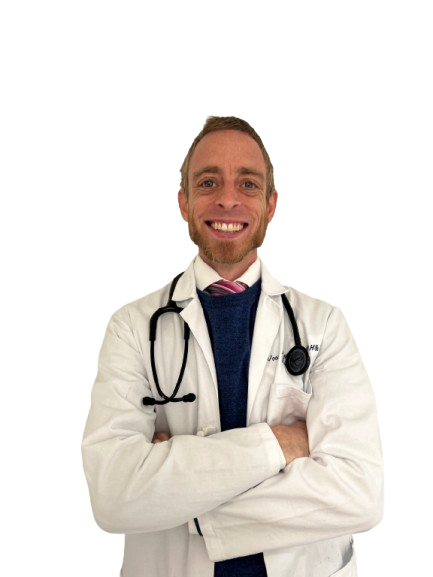
Dr. Joe Mather MD, MPH&TM
I am a Medical Doctor practicing in New Orleans, and hold medical licenses from the states of Louisiana and Texas. I am board certified by the American Board of Family Medicine and have been practicing functional medicine for over a decade.
Because so many people struggle for years trying to recover their health, often spending thousands of dollars chasing dead ends, I'm passionate about making functional medicine cost-effective and practical.
I graduated from the Tulane University School of Medicine and the School of Public Health in 2011 and completed my training in Family Practice in 2014. I treat many conditions but have expertise working with chronic GI symptoms, mold and heavy metals and in preventative cardiac care.
Would you like more information, or to schedule an appointment?