
Issues With Functional Medicine Labs, TSH, CIRS, Mycotoxins and More
I recently sat down with Andy Feltovich of The Signal. Among other things we covered mold toxicity, thyroid over-prescribing, and the testing obsession that's quietly bankrupting patients without making them better.
If you've been sick for years and have a drawer full of lab results to show for it, this one is for you. We talked about
The financial bias in functional medicine testing is real, and it's hurting patients.
How lab companies have financial incentives to generate false positives —because a positive test means more tests ordered
How more testing doesn’t mean better results.
How The Shoemaker CIRS protocol deserves credit for putting mold illness on the map — but unfortunately doesn’t work well and hurts patients financially
The use of urinary mycotoxin testing - the benefits and downsides
My general clinical framework when working with patients
Issues with trying to micromanage the microbiome
What I'd change about conventional medicine
**Jump to a section** — each link opens the video at that moment.

- [00:07](https://www.youtube.com/watch?v=vqd8qbHihwI&t=7s) — How Dr. Joe Found Functional Medicine
- [06:19](https://www.youtube.com/watch?v=vqd8qbHihwI&t=379s) — How to Diagnose Mold Toxicity
- [14:12](https://www.youtube.com/watch?v=vqd8qbHihwI&t=852s) — Problems with Dr Shoemaker's CIRS Labs
- [17:20](https://www.youtube.com/watch?v=vqd8qbHihwI&t=1040s) — Why More Tests Make Bad Doctors
- [19:47](https://www.youtube.com/watch?v=vqd8qbHihwI&t=1187s) — Urine Mycotoxin Tests: Pros and Cons
- [22:45](https://www.youtube.com/watch?v=vqd8qbHihwI&t=1365s) — The Problems With Functional Medicine Labs
- [28:49](https://www.youtube.com/watch?v=vqd8qbHihwI&t=1729s) — 3 Steps To Heal: Fundamentals, Gut, Then Disease
- [32:05](https://www.youtube.com/watch?v=vqd8qbHihwI&t=1925s) — Treating a Mold Patient
- [37:45](https://www.youtube.com/watch?v=vqd8qbHihwI&t=2265s) — True Functional Medicine
- [42:02](https://www.youtube.com/watch?v=vqd8qbHihwI&t=2522s) — Why Sleep Beats Diet and Exercise
- [44:27](https://www.youtube.com/watch?v=vqd8qbHihwI&t=2667s) — The 4 Tests Every 50 Year Old Should Get
- [50:06](https://www.youtube.com/watch?v=vqd8qbHihwI&t=3006s) — Timing a SIBO Breath Test
- [51:33](https://www.youtube.com/watch?v=vqd8qbHihwI&t=3093s) — Mold in Public Buildings and Air Testing
- [54:52](https://www.youtube.com/watch?v=vqd8qbHihwI&t=3292s) — The MTHFR Myth
- [55:24](https://www.youtube.com/watch?v=vqd8qbHihwI&t=3324s) — What I Would Change About Conventional Medicine
How Dr. Joe Found Functional Medicine
By the end of my family practice residency, my clinic patients just weren't better — the diabetics, the hypertensives, the chronic pain, fatigue, and GI cases. I had followed every guideline and studied hard, and it wasn't enough.
So I went looking. Functional medicine got a chunk of patients well. A deep dive into GI care got another chunk. The last and sickest chunk turned out to be sick from mold, and I learned that approach from Dr. Neil Nathan.
How to Diagnose Mold Toxicity
Mold doesn't make everyone sick, and it doesn't make everyone sick the same way. Before I call a patient mold-toxic, four things have to line up:
Rule out everything else first. Any other illness or toxicant that could explain the symptoms gets treated or excluded before mold goes on the list.
Clear exposure. Not "maybe I've been in some moldy buildings." More like: moved into a house, and six months later came chronic fatigue, depression, and new Hashimoto's. A tripling of existing symptoms after a move counts too.
A distinct symptom pairing. Chronic fatigue plus a neurologic or psychiatric symptom — brain fog, memory loss, motor weakness, new anxiety, new depression. That pairing separates toxicity from simple mold allergy.
A biologic marker. I confirm with a urine mycotoxin test paired with blood work showing antibodies to the molds themselves — not to the toxins, to the molds.
Two patterns show up in the vulnerable patients I see: hypermobility (about 40% of my mold-toxicity patients are hypermobile, hEDS-type) and a history of childhood trauma. Bendy connective tissue and an overprotective immune system both raise susceptibility.
Problems with Dr Shoemaker’s CIRS Labs
Doing too many labs hurts patients. Dr. Ritchie Shoemaker deserves credit as one of the first to bring mold illness onto the scene and to build out CIRS — Chronic Inflammatory Response Syndrome. But the approach that grew out of it leans on repeated blood panels that often run a minimum of $1,000 each time they are run.
Even worse, the markers being tracked — C4a, TGF-beta, and the like — are inflammatory numbers that drift up and down for hundreds of reasons. Telling a suffering patient to knock down walls in their house because one of these ticked up is unfair when changes in their labs could be random noise.
My rule: if a lab causes more fear and doesn't change your treatment plan, it shouldn't be ordered.
Why More Tests Make Bad Doctors
The more tests a doctor orders up front, the less likely they are to help you — with a 5% false-positive rate per test, ordering 100 tests guarantees false positives, leaving you with five "abnormal" findings and no clear path to follow. Most doctors then treat all five at once with dozens of supplements, so they never learn what's actually helping versus what's making the patient worse. The result is a clinician wandering random paths instead of using a simpler, cleaner way to get people better.
Urine Mycotoxin Tests: Pros and Cons
A high urine mycotoxin result is genuinely ambiguous. It could mean heavy toxin exposure. Or it could be a young patient with fresh kidneys and liver efficiently pumping toxins out — which is a good thing. You can't tell which from the number alone.
There's a second problem: one of the labs I like most isn't corrected for how concentrated or dilute the urine sample is, and they don't flag that for you.
So I order this test once, pair it with blood work, and tell patients not to retest it. Chasing that number over time drives doctors and patients equally crazy, and it drives up cost for no clinical gain.
That said, urine mycotoxin tests have been validated in the scientific literature as an accurate way of determining active exposure to mold so they are absolutely useful in the right setting.
The Problems With Functional Medicine Labs
The more tests a doctor orders up front, the less likely they are to help you. Say a single test's false-positive rate is 5%. Order one and you're probably fine. Order 100 and you're guaranteed false positives — and now you're staring at five "abnormal" results with no idea which path to follow. Most doctors then treat all five at once, with dozens of supplements, and never learn what actually helped.
The incentives make it worse. Lab companies benefit from generating positives, because a positive means a reorder. Most functional medicine doctors mark labs up and take a cut per test. Direct-to-consumer testing is rising exponentially, and much of it has never been validated against whether it predicts your health at all.
A test will never heal you.
Given the choice between $500 on a lab and $500 on a gym membership that puts muscle on you, spend it on the gym.
3 Steps To Heal: Fundamentals, Gut, Then Disease
I treat almost every chronic illness in the same three-tier order. Skip a tier and the ones above it tend to fail.
Fundamentals. Free lifestyle changes — sleep, not being constipated, removing ongoing exposures. Least likely to hurt you, and the base everything else sits on.
The gut. Easy to treat, and the one organ system most likely to improve symptoms outside itself. Fix the gut and you'll often see brain fog, skin, mood, body composition, and lipids move with it.
Disease-specific. Only here do we go after the thing on top — mold, heavy metals, autoimmune thyroid disease, and so on. Roughly 40% of my patients land on mold, but that's far from universal.
Treating a Mold Patient
Do-it-yourself mold treatment can leave you sicker than when you started. For a standard mold patient, the fundamentals come first: fix constipation, stop ongoing over-exposure, calm mast cell activation, address limbic dysfunction, and treat hidden sleep problems like upper airway resistance syndrome — the evil cousin of sleep apnea.
Then the gut. I lean heavily on broad-spectrum probiotics — lactobacillus, saccharomyces, bacillus, twice daily. Many of these species either bind toxins directly or improve how well you detoxify, so treating the gut quietly does a little of everything.
Only then do I move to the mold-specific tools:
Binders — they clear toxic load over the long term so the body can heal; they don't usually knock down symptoms fast.
Antifungal drugs — for the right subset of patients, genuinely helpful.
Allergy drops — for patients whose allergic response to mold (hives, flushing, food reactions) goes beyond MCAS.
True Functional Medicine
Integrative and functional aren't the same thing. Integrative medicine is conventional care plus modalities — acupuncture, hypnosis, herbs bolted onto the base. Better than conventional alone, but still additive.
Functional medicine, to me, is a question more than a thing: what is driving this patient's symptoms, and what — when I treat it — actually lowers their illness? That's the real definition of root cause.
The field drifted toward endless labs and supplements partly because of its history. One of its most influential early figures, Jeffrey Bland, was a brilliant biochemist with deep roots in the supplement industry — and that colored where the whole field went.
Why Sleep Beats Diet and Exercise
Sleep is the fundamental patients neglect most, and it usually matters more than diet or exercise. Everyone already knows to eat well and move. Almost no one guards their sleep.
I've had advanced toxicity cases who turned out to have untreated sleep apnea or upper airway resistance syndrome the entire time. Open the nose, add a dilator, reduce the turbinates so they can finally breathe — and they heal.
The biology makes the ranking obvious: you can become psychotic within a few days of no sleep. You don't become psychotic from a few days of fasting or skipped workouts.
The 4 Tests Every 50 Year Old Should Get
Every adult over 50 needs a few numbers a standard checkup usually skips.
A one-time blood lead level. Above 2, your risk of cardiovascular disease, stroke, hypertension, and all-cause death rises.
A coronary calcium score. Around $100 and a 10-minute CT. This is a test you want to score a zero on — it catches coronary disease before you ever feel chest pain.
ApoB. The cheap $5 lipid panel only estimates LDL, and that estimate is wrong in about 20% of people. Every LDL particle carries one ApoB protein, so counting ApoB gives you an exact count of the disease-causing particles.
Lp(a). The evil twin of LDL. About 20% of people carry this stickier, more atherogenic particle, and it's genetic. It's the reason a lean marathon runner eating celery can drop dead at 55 with a "normal" cholesterol panel. Check it once.
Timing a SIBO Breath Test
Start with what you already know helps the condition, then let the timeline tell you when to test. I know roughly how fast a patient should improve. SIBO patients should be meaningfully better by the three-month mark. Complex mold patients should trend up month by month.
If they're not clearly better by the expected point — three months for SIBO, six for the complex cases — that's the moment to draw back and go in heavy on labs to find what's holding them back. Leading with a giant panel just gets you false positives you'll have to explain away.
Mold in Public Buildings and Air Testing
We test buildings for mold in the one place mold doesn't grow. I see far too many teachers with mold toxicity, and the reason is failing public infrastructure — old ACs, outdated drop ceilings, decades of quiet water damage. Schools, libraries, and city halls should not be full of neurotoxins, and we have to ask how much of the behavioral trouble in aging schools traces back to exposure.
The standard air test — a tripod counting spores in the middle of the room — misses the point. Mold lives in the walls, the subfloor, behind the cabinet, on the back of a mirror. By the time enough spores reach the center of the room to flag a positive, you can already see the mold on the ceiling.
That's why the test persists: it lets a building owner point at a "clean" result while a whole floor of people develops sinus infections and new autoimmune disease. Air testing alone is not enough to call a building safe.
The MTHFR Myth and Thyroid Overtreatment:
MTHFR is not the cause of all chronic disease. It's a gene variant that's usually insignificant outside of some psychiatric conditions — hyped mainly because doctors and supplement companies like to sell methylated vitamins.
What I Would Change About Conventional Medicine
Except in rare circumstances patients don't benefit from thyroid hormone until the TSH is above 10 and they have a low T4.
That matters because unneeded thyroid hormone isn't a sugar pill. It can cause agitation, anxiety, insomnia, osteoporosis, and in some people heart disease — and the patients most often put on it are women in their 50s and 60s, quietly thinning their bones.
Meanwhile, patients are routinely put on lifelong thyroid hormone after a single slightly elevated TSH, even though this lab has about a 60% chance of normalizing on its own within two months.
Roughly 23 million Americans are on thyroid hormone, and about 21 million of them don't need it and are subjected to the harms listed above,
▶️ Watch the full interview here: https://youtu.be/vqd8qbHihwI
Would you like more information, or to schedule an appointment?
Dr. Joe Mather MD, MPH&TM
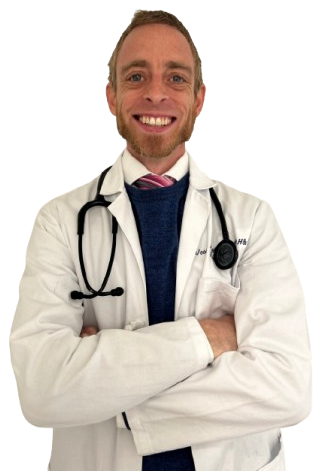
I am a Medical Doctor practicing in New Orleans, and hold medical licenses from the states of Louisiana and Texas. I am board certified by the American Board of Family Medicine and have been practicing functional medicine for over a decade.
Because so many people struggle for years trying to recover their health, often spending thousands of dollars chasing dead ends, I'm passionate about making functional medicine cost-effective and practical.
I graduated from the Tulane University School of Medicine and the School of Public Health in 2011 and completed my training in Family Practice in 2014. I treat many conditions but have expertise working with chronic GI symptoms, mold and heavy metals and in preventative cardiac care.