

Mold Toxicity: How 3 Doctors Diagnose, Test, and Treat It
I sat down with Dr. Sandeep Gupta in Australia and Dr. Amy Derksen in Seattle — two of the most experienced mold illness practitioners in the world — to compare notes. Between the three of us, we estimate mold is a driving factor in 50 to 60% of our patients.
All three of us think mold treatment has been made too complicated. So we came together to compare our approaches to diagnosis, antibody testing, probiotics, sinus care, and what to check when a diagnosed patient still isn't getting better — and to try to make getting well from this a little simpler.
Jump to a section — each link opens the video at that moment.
- 0:00 — Percent of Patients Affected by Mold Illness
- 2:53 — Diagnosing Mold Illness: History vs Testing
- 5:50 — Mold Antibody Testing
- 9:23 — myMycoLab Antibody Testing
- 14:15 — Order of Treatment for Mold Patients
- 20:00 — Dr. Gupta's Mold Training
- 21:55 — Dr. Derksen's Mold Illness Story
- 25:22 — Probiotics as Early Mold Treatment
- 30:53 — Sinus Care for Mold Colonization
- 38:01 — Complicating Factors in Non-Responders
Percent of Patients Affected by Mold Illness
Ask three mold doctors what percentage of their patients have mold as a driver, and you get 50 to 60% across the board.
Sandeep landed on that number after training with Dr. Shoemaker in 2014. Patients he was certain didn't have mold as part of their picture kept turning out to have mold as part of their picture anyway.
Amy sees it as "the sneaker in the background." Patients come in for autism, chronic illness, autoimmunity, Lyme disease — and mold is quietly fueling all of it.
Her framing is a good one: mold is fuel on the fire. Something else may have started the inflammation. Mold keeps it burning.
Diagnosing Mold Illness: History vs Testing: We Start With Your Story, Not Your Labs
The unanimous answer: start with history, not labs.
Amy's approach is a deep intake. Where did you grow up? What was the house like? Did your symptoms start when you changed jobs or moved? Chronic sinusitis that keeps coming back, unexplained mast cell or histamine reactions, gut issues that won't respond to treatment — all of it points toward mold before a single test is run.
Sandeep agrees, and he's blunt about why: there is no perfect mold test. Even the visual contrast sensitivity (VCS) test he uses in-office will miss up to 50% of people who actually have mold-related illness. He still uses it — but as a monitoring tool to track improvement, not as a diagnostic gate.
The exception to "history first": legal cases. If a patient has a legal claim tied to a water-damaged building, Sandeep runs comprehensive testing, because a judge isn't going to accept a doctor's clinical impression as evidence.
Mold Antibody Testing: A Test Most Conventional Doctors Actually Understand
Both Sandeep and I use IgG and IgE antibody testing against mold species themselves — separate from mycotoxin testing, and separate from the CIRS/Shoemaker biomarker panel most people have heard of.
I order mine through Quest. It's covered by insurance, and conventional doctors trust it because it has a name they recognize. Try explaining a mycotoxin panel to a doctor who's never heard the word mycotoxin and you’ll get pushback - but an antibody test, they understand immediately.
The pattern that's emerged from both of our practices:
High IgE, lower IgG — allergy-dominant. These patients respond to mast cell and histamine support.
High IgG, negative IgE — these are the sicker patients. Neurologic symptoms. Psychiatric symptoms. Fatigue syndromes.
That distinction alone can point a treatment plan in a completely different direction.
The Problem with myMycoLab Antibody Testing (It’s Always Positive)
There's a second antibody test — myMycoLab — that tests IgG against the toxins mold produces, not the mold itself.
My honest problem with it: I've never seen a negative result. Sandeep has used it for years and agrees it's rarely negative, though he's had one or two. His read: it's more sensitive but less specific, and it's biased toward picking up trichothecenes — the mycotoxin family he associates with heavier brain fog.
A test that's almost always positive isn't distinguishing much. That's worth knowing before you spend money on it. Sandeep still finds it useful in a narrower way: as a broad-brush signal for which class of mycotoxin — trichothecene-heavy versus Aspergillus/Penicillium-heavy — might be dominant, which nudges his binder choice one direction or another.
Order of Treatment for Mold Patients: There's a Foundation Before There's a Protocol
No universal protocol. But a shared foundation.
Amy starts with gut health and elimination — literally, how many times a week are you having a bowel movement. She runs an organic acid test to check methylation, mitochondrial function, and glutathione status. Drainage support and a binder come next. Mast cell control gets addressed early if it's flaring.
Sandeep's first move is different: assess how sensitive the patient is.
Highly sensitive patients get mast cell support, limbic system work, and only a "toothpick amount" of binder. Getting them out of the moldy environment matters more than any supplement.
Less sensitive patients get a broader workup — parasites, constipation, a full nutrient panel — then a gradual layering in of antifungals, binders, and detox support.
Both approaches agree on one thing that gets skipped constantly: can the patient get away from the mold source? No protocol beats an ongoing exposure.
Dr. Gupta's Mold Training: The Training Manual With No Answers In It
It’s worth understanding where Sandeep's approach comes from.
His mold journey started with a house flood in 2011 that left his partner bed-bound with no framework to explain it. A patient told him about a doctor named Richie Shoemaker. Sandeep had no idea who that was — he signed up anyway.
It took six months to get a call with Shoemaker, scheduled between 1 and 3 a.m. Shoemaker sent him a 2,000-page document and an exam right after the first call. (None of the exam answers were in the document, it was a huge waste of time.)
He's since been shaped since then by training under Dr. Neil Nathan, whose own path started with Shoemaker before diverging — Nathan trained with Shoemaker first, then moved in a different direction once he found that parts of the Shoemaker protocol were not helping his patients.
Dr. Derksen's Mold Illness Story: She Was Made Sick By the System Meant to Help Her
Amy's path into mold medicine started with her own body.
She had repeated pneumonia every year as a child — parents who smoked, a moldy childhood home, and a pattern of getting sick and immediately going on amoxicillin without anyone asking why. A water leak in college triggered a rash around her neck and thyroid that later became Hashimoto's.
She trained under Dr. Klinghardt after that, specializing first in autism, then expanding into chronic illness broadly — Lyme disease, mold illness, and the overlap between them.
She and Sandeep were introduced by a mutual colleague about a year and a half before this conversation. Both had arrived, independently, at similar treatment conclusions through their own clinical experience. Together they built a practitioner course, Mold Illness Mastery — the class, in Amy's words, they wish they'd had instead of learning it the hard way.
Probiotics as Early Mold Treatment: Joe's Soapbox
Here's my contrarian one, and it changed my practice more than anything else in the last decade.
Early in my career, it took 12 to 24 months before a mold patient felt fully well. Somewhere along the way I started loading patients onto broad-spectrum probiotics — intensely, right at the start, before binders, before antifungals, before mast cell support.
Patients started getting better dramatically faster.
Four species do the heavy lifting: Lactobacillus plantarum, Lactobacillus rhamnosus, Lactobacillus casei, and Saccharomyces boulardii. These bind not just mold toxins but endotoxins, carcinogens, PFAS, and microplastics. That broad detoxification effect is likely why probiotics show up helping fatigue, allergies, bone density, and cholesterol — it goes far beyond gut flora.
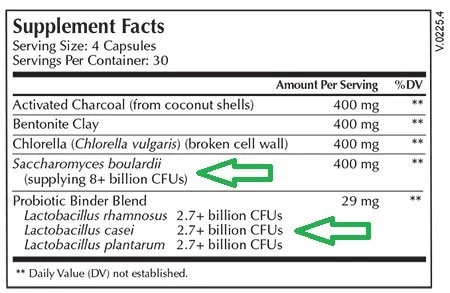
A probiotic dosing detail that matters: twice daily beats once daily, even at the same total dose. For highly sensitive patients, start at a sixty-fourth of a teaspoon of powder — yes, that's a real measuring spoon — and build up from there.
One more thing this fixes that surprises people: probiotics can act as monotherapy for SIBO. They're antimicrobial. They decontaminate the small bowel while doing everything else.
Sinus Care for Mold Colonization: The Fix That's Reducing How Much Antifungal Patients Need
I've been getting more aggressive about sinus care, and it's directly reducing how much systemic antifungal medication my patients need.
The logic, from Amy: sinuses are warm, wet, and dark — exactly what a fungal colony wants. If you're snoring, or your smartwatch shows dropping oxygen at night, that's a flag.
Rinses beat sprays. A nasal spray hits the surface of an infection. A rinse or nebulizer actually clears volume. From there:
Colloidal silver, propolis, and ozonated oil blends as natural options
Xylitol nasal spray (Xlear), used twice daily for a month — patients regularly report they can finally breathe after three weeks
Compounded formulas combining an antifungal with a biofilm-disrupting agent for stubborn cases
Sandeep's first-line tool in Australia is a nebulized formula called 98 Alive. If that doesn't resolve it, he moves to nebulized amphotericin B.
This connects to a bigger claim where I have a opinion different from most mold doctors. Although most doctors believe that mold colonizes the gut, I don't think that's true. The studies I’ve reviewed of the mycobiome (the types of fungi that colonize the gut) do not show that toxic mold species like Aspergillus, Penicillium or Stachybotyrs can colonize the gut wall. Where fungus actually colonizes is sinus, lungs, and skin. When I get sinus care aggressive enough, patients need dramatically less systemic itraconazole — which tells me the antifungal was doing its work in the lungs and skin, not the gut.
Sandeep and Amy both flagged candida overgrowth as a real and separate gut issue in mold patients, treated with fluconazole or itraconazole, which double as TH1/TH2 immune modulators. That's a genuine gut finding. It's just not mold living there.
Complicating Factors in Non-Responders: What to Check When a Mold Patient Isn't Improving
Amy's advice, if you're a practitioner: get your ego out of the way. If your standard protocol isn't working, the answer isn't to push harder on the same plan. It's "what am I missing, and could it be mold." Patients trust a doctor who says that more than one who insists the plan is right and the patient is the problem.
Sandeep's checklist for a patient already diagnosed with mold who still isn't improving:
Rule out COVID spike protein as a complicating factor
Rule out Lyme disease and co-infections
Look for hidden reservoirs — he's treated patients for three to five years who still show lingering fungal colonization in the sinuses
Dr. Joe finds that ongoing exposure, limbic dysfunction, MCAS, missed fundamentals such as sleep apnea, muscle loss or gut issues are more likely the problem. He does not find COVID to be an issue in his mold patients and feels that Lyme disease is overdiagnosed or incorrectly diagnosed in the patients that come to see him.
Mold illness is treatable. It's also stubborn, and it hides in places a single test or a single protocol won't catch. That's exactly why this conversation happened — three doctors, three approaches, comparing notes instead of guarding territory.
If any part of this sounds like your story, watch the full conversation above.
Dr. Joe Mather MD, MPH&TM
I am a Medical Doctor practicing in New Orleans, and hold medical licenses from the states of Louisiana and Texas. I am board certified by the American Board of Family Medicine and have been practicing functional medicine for over a decade.
Because so many people struggle for years trying to recover their health, often spending thousands of dollars chasing dead ends, I'm passionate about making functional medicine cost-effective and practical.
I graduated from the Tulane University School of Medicine and the School of Public Health in 2011 and completed my training in Family Practice in 2014. I treat many conditions but have expertise working with chronic GI symptoms, mold and heavy metals and in preventative cardiac care.
Would you like more information, or to schedule an appointment?