

Are Testosterone Pellets Safe?
If you've looked into hormone therapy for menopause, you've heard the pitch: pellets are "bioidentical," they're "natural," they give you smooth, steady hormone levels instead of the ups and downs of a cream or a patch. Med spas and hormone clinics are opening on every corner selling exactly that story.
Here's the problem. There is virtually no worthwhile evidence behind pellets, and it turns out that “bioidentical levels” are a lie when it comes to pellets. Doctors are experimenting on patients by treating patients by marketing materials rather than science.
Jump to a section — each link opens the video at that moment.
- 00:00 — Pellet Therapy: An Industry Built on No Evidence
- 00:25 — Real Patient Harm From Pellets and Creams
- 06:35 — Why "Bioidentical" Is A Lie
- 09:29 — Reviewing Biote's Research
- 19:42 — Testosterone Pellet Side Effects and Dose Problems
- 23:04 — How Doctors Get Certified to Give Pellets
- 25:50 — What Major Medical Societies Say About Pellets
- 27:23 — Testosterone Patch Trial
- 34:47 — Dr. Joe's Clinical Experience
- 38:19 — Hormone Clinics and Med Spas Are Dangerous
Pellet Therapy: An Industry Built on No Evidence
There is virtually no evidence for pellet-based hormone replacement. Meanwhile, med spas and hormone clinics are opening everywhere.
I've compared what the science and literature actually say against what hormone specialists are claiming. The gap is so wide that the only conclusion left is that this is about cash flow, not care.
That's not a throwaway line. It's the argument I spend the rest of this post backing up with patient cases and BioTE's own research.
Real Patient Harm From Testosterone
These aren't hypothetical risks. They're patients.
A nurse in her late 40s came to me after years of aggressive testosterone and estrogen pellets. Her GI issues worsened, she had to have her gallbladder removed, and her labs showed elevated testosterone, elevated estradiol, and abnormal liver enzymes. Elevated testosterone is itself a documented risk factor for needing gallbladder surgery — plus the blood-thickening effects that bring headache, fatigue, blurred vision, and paresthesias.
A 42-year-old patient stopped having periods and went to an OBGYN who “specializes” in hormone replcaement. For her issues she was prescribed progesterone, DHEA, and a testosterone vaginal cream. She was given these treatments for years even though they didn’t help her issue. Here’s what she said about the OBGYN’s approach to hormone replacement:
"She's treating me by theory. She wasn't listening."
In under a year, unmonitored dosing took her testosterone from under 12 to 188 to 834 on that cream — and treatment continued even as levels climbed. She eventually developed breast lumps and quietly stopped the testosterone herself, too afraid to tell her doctor. When she came to me, I had her stop all remaining hormones, I prescribed a GI-based diet, and a prescriptive dose of probiotics… She had a natural period in about five weeks.
A case report describes a 58-year-old postmenopausal woman who developed severe psychosis after years of testosterone pellets that had climbed to 250 milligrams. Paranoid delusions about her children being evil. Impulsive thoughts of hurting them. A two-week hospitalization was required to stabilize her. Her testosterone level at its peak: 1,171. The study authors' own conclusion: prolonged testosterone therapy "may precipitate severe psychiatric symptoms" and prescribers need "greater vigilance."
Hormone specialists generally come from a narrow background — often OBGYNs looking to get out of hospital work, or NPs and PAs without broad general-medicine experience. When therapy doesn't work, their only lever is to bump the dose.
Why “Bioidentical” Is A Lie
A normal female testosterone level runs roughly 10 to 40. Even in pregnancy, when the body needs extra anabolic support for a developing fetus, it tops out around 85. That's the outer edge of bioidentical, for nine months, one time in a woman's life.
Bioidentical hormone levels, as marketed by pellet clinics, are pseudoscience. What pellets actually deliver blows past that range entirely — not close to bioidentical, nowhere near it.
Clinically, I find women tend to feel their best up to a ceiling of about 100. That's my experience, not proven science — and that's exactly the point. We need real research to fill in these gaps, because right now the hormone specialists pushing doses far above this don't know the answer either. They're pulling numbers out of the air, and it's hurting people.
Reviewing biote's Research
Biote is the largest hormone pellet provider in the country, pulling in almost $200 million a year. So I went and read all the studies I could find on their website’s research page. They cite 11 research items:
Four are company-written white papers — not peer reviewed science - these are marketing opinion pieces, dressed up as research.
Two are studies written by BioTE's own founder, Dr. Gary Donovitz.
One is a "consensus guideline" that sounds independent until you learn it originated from a 2017 conference Dr. Donovitz hosted and chaired.
Two are on unrelated topics — an MRI study on oral estrogen, and a study of oral estrogen's effect on eye health. Neither involves pellets.
One is a news article about COVID.
One is an irrelevant academic argument between doctors in a medical journal.
One of the white papers, on thyroid disease, cites an "incidence of hypothyroidism as high as 80%" from a Belgian doctor. That doctor died in 1928. The next sentence claims hypothyroidism affects 50% of the population, sourced to a book that invented its own diagnosis — "type II hypothyroidism" — that isn't recognized medicine.
The first actual study, a retrospective chart review of 2,377 women, claims pellet therapy reduces invasive breast cancer risk: 144 cases per 100,000 in treated women versus 312 per 100,000 in a never-treated comparison group. It's co-written by Mandy Cotton, a nurse practitioner who operates a Texas hormone clinic. She is Dr. Donovitz’s daughter.That's an undisclosed conflict of interest sitting right in the data.
A second BioTE-cited study tracked over a million pellet procedures and reported low complication rates. The data was self-reported by BioTE franchise doctors — to Donovitz, who is, in effect, their boss. Would you tell your boss about every bad outcome in your clinic? The paper's own text acknowledges that some of testosterone's secondary reactions — body and facial hair, acne, hair thinning — "were not analyzed."
If a doctor reads biote’s “evidence” and thinks it is good evidence for putting a pellet in you, they should be ashamed, and you should question their clinical judgement and knowledge.
Testosterone Pellet Side Effects and Dose Problems
Pellets aren't a sugar pill. They carry real, documented side effects.
In one study comparing women on testosterone therapy to controls, treated women were 65% more likely to develop acne and 58% more likely to have abnormal hair growth — androgenic, virilizing effects. That's on top of the oily skin, agitation, and hypersexual libido I see clinically once a woman's testosterone climbs over 100.
The 2019 Global Consensus Position Statement on testosterone therapy for women — signed by a broad panel of specialty societies — puts it plainly: at doses that approximate normal physiologic testosterone (that's 10 to 85, not 250, not 350, not 1,171), therapy is associated with mild increases in acne and body or facial hair in some women. It did not find significant risk of hair loss, clitoral enlargement, or voice deepening at those physiologic doses.
But pellets don't deliver physiologic doses. They start low, spike to a level that never comes naturally peak, then slowly taper — and for most of that curve, the level sits well above where the body wants it. When hormone levels run that high, the body goes into defense mode: it produces more sex hormone-binding globulin, pulls back hormone receptors, and spends its energy cleaning up the excess. That's where the problems start. The benefits pellet clinics advertise for sexual function and well-being are, per the consensus statement, hypothesis-generating at best — not proven, and not confirmed safe.
How Doctors Get Certified to Give Pellets
A doctor can get certified to implant hormone pellets in a single day. That's less time than I spent making this video and writing this article.
One training program's own pitch explains why doctors sign up: pellets take minutes to perform, only need repeating three or four times a year, and you can bill roughly $500 a procedure with excellent profit margins. The course literally advertises that it pays for itself in five patients.
Another program, the Academy of Functional Medicine, claims pellets are "widely accepted as the most effective and most bioidentical method" to deliver hormones, and that "there is more evidence to support the use of pellets" than any other method.
Both claims are false.
What Major Medical Societies Say About Pellets
ACOG, the Menopause Society, the Endocrine Society, the Global Consensus Position Statement, and the National Academies all advise against testosterone pellet therapy. Every physician still routinely using pellets is going against the best available medical guidance.
These reviews consistently raise the same concerns: pellets produce supraphysiologic peaks, there isn't adequate long-term safety data, and there's no reliable system to verify a given pellet's purity or dose. Consensus guidelines run conservative by nature, and that's worth keeping in mind — but when every major body lands in the same place, and clinics keep expanding anyway, the fallout is not hypothetical.
Testosterone Patch Trial
Here's what a grown-up study looks like, next to the "research" pellet clinics are trained on.
A randomized, placebo-controlled trial tested a testosterone patch in 447 surgically menopausal women with low libido — more women in this one study than in all the pellet research combined. Over 24 weeks, women were randomized into four groups of at least 100 each: placebo, and three doses — 150, 300, and 450 micrograms a day.
The placebo group's testosterone barely moved — 16 at baseline, 18 at 24 weeks — consistent with the true bioidentical range. The treatment groups saw real, dose-dependent increases: 150 mcg brought levels into the mid-40s, 300 mcg to the low 90s, and 450 mcg climbed higher still. But higher levels didn't mean a better result.
Only the 300-microgram dose produced a statistically significant improvement over placebo in both sexual desire score and frequency of satisfying sexual activity. The 150-microgram dose showed no real effect. The 450-microgram dose — the one that pushed testosterone highest — did no better than 300. More hormone in the bloodstream didn't translate to more benefit.
Serious adverse events were tracked and reported at similar rates across treatment and placebo groups, with none judged clearly related to the drug. Hirsutism was uncommon and similar between groups. The placebo arm also improved meaningfully, a reminder that just enrolling in a study — talking to your partner more, tracking your symptoms — can move the numbers on its own.
This is the kind of dosing evidence pellet therapy has never produced. Given a real trial like this exists, why don't we have an approved testosterone patch for women? I don't have a good answer for that.
Dr. Joe’s Clinical Experience
When a woman is menopausal, her symptoms are almost always managed with low-dose estrogen patch, oral progesterone, lifestyle changes, and GI work. When I do that groundwork first, I rarely find she needs testosterone at all.
I don't think there's justification for routine pellet therapy. Maybe there are rare, one-in-a-million exceptions, but the science I've read says the harms outweigh the benefits — especially once you're talking about an unproven compounded pellet.
The doctors prescribing pellets are doing so because it makes them money, not because it's a good treatment.
That said, clinic and study aren't the same thing. I hear from many women on topical testosterone who feel genuinely better — usually somewhere between 50 and 100, not the doses I've described above. That's real, and it matters. But there's no justification for a total testosterone above 100. If your level is higher than that, ask your provider why. Ask where the evidence is that anything above 85 — the ceiling even in pregnancy — is a good idea. In my experience, they can't answer. That's the problem.
Hormone Clinics and Med Spas Are Dangerous.
The clinics doing the most harm are the med spas — the ones offering to "optimize your hormones" alongside a facial.
These clinics are built to push hormones, not to run a thorough exam or dig into why a symptom is showing up in the first place. They draw labs, then dose. If it doesn't work, they dose higher. Increasingly, they're staffed by PAs and NPs who may be excellent clinicians in general but often don't have the training to know whether pellet therapy is right for a given patient — and who reasonably assume the medical director, or BioTE itself, has already done the homework.
Don't assume an OBGYN is automatically your best guide to hormones, either. Most OBGYN careers are built around deliveries, surgery, and outpatient gynecologic care — pap smears, mammograms, birth control. Hormone replacement isn't deeply taught in residency, and in my experience, OBGYNs are sometimes the most aggressive pellet prescribers, which tracks with a surgical mindset more comfortable with intervention than with waiting and watching.
Lastly, being an OBGYN doesn't automatically make someone better at hormone replacement. Please be cautious about who you trust with this decision.
If you've been struggling with menopausal symptoms and wondering whether pellets are the answer, the good news is there's a path forward that doesn't require guessing at a dose. Watch the full video, and if your current provider can't answer the hard questions, that's worth paying attention to.
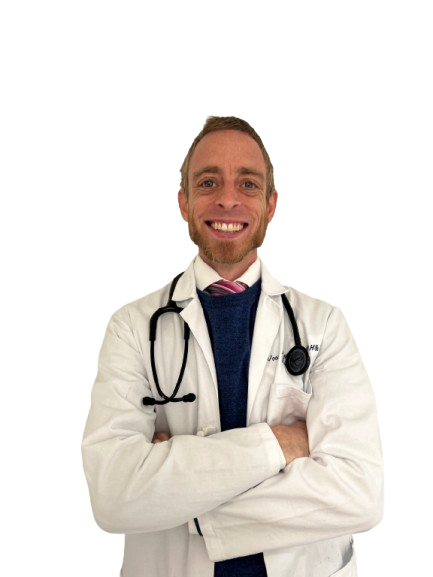
Dr. Joe Mather MD, MPH&TM
I am a Medical Doctor practicing in New Orleans, and hold medical licenses from the states of Louisiana and Texas. I am board certified by the American Board of Family Medicine and have been practicing functional medicine for over a decade.
Because so many people struggle for years trying to recover their health, often spending thousands of dollars chasing dead ends, I'm passionate about making functional medicine cost-effective and practical.
I graduated from the Tulane University School of Medicine and the School of Public Health in 2011 and completed my training in Family Practice in 2014. I treat many conditions but have expertise working with chronic GI symptoms, mold and heavy metals and in preventative cardiac care.
Would you like more information, or to schedule an appointment?